
Why Audit Readiness Is a Competitive Advantage in Pharmaceutical Manufacturing
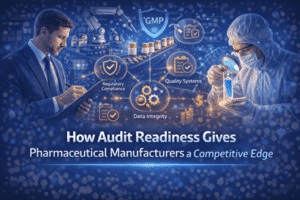
In the pharmaceutical industry, audits are not occasional events, they are a constant reality. Regulatory inspections, client audits, and internal quality reviews are part of maintaining compliance and ensuring patient safety. But today, audit readiness is more than a regulatory requirement.
For pharmaceutical manufacturers, being audit-ready at all times creates a measurable competitive advantage. It strengthens credibility, accelerates approvals, and builds long-term trust with partners and regulators.
This blog explores how audit readiness moves beyond compliance and becomes a strategic asset in pharmaceutical manufacturing.
What Is Audit Readiness in Pharmaceutical Manufacturing?
Audit readiness refers to a company’s ability to successfully undergo regulatory or client inspections at any time without last-minute preparation. It reflects:
- Strong documentation practices
- Consistent adherence to Good Manufacturing Practices (GMP)
- Clear standard operating procedures (SOPs)
- Well-trained personnel
- Transparent quality systems
An audit-ready organization operates as if an inspection could happen tomorrow, because in pharma, it often can.
Why Audits Matter in the Pharmaceutical Industry
Pharmaceutical audits ensure that medicines are safe, effective, and manufactured according to strict quality standards. Regulatory bodies conduct inspections to verify:
- Process validation
- Data integrity
- Equipment qualification
- Cleanroom compliance
- Batch record accuracy
Failing an audit can lead to warning letters, product recalls, import alerts, or production shutdowns, all of which can severely impact reputation and revenue.
From Compliance Obligation to Competitive Advantage
Traditionally, audits were viewed as stressful compliance checkpoints. However, forward-thinking pharmaceutical manufacturers now treat audit readiness as a continuous discipline rather than a reactive exercise.
When audit readiness becomes embedded in daily operations, companies benefit from:
- Faster regulatory approvals
- Greater client confidence
- Reduced operational disruptions
- Stronger global market access
Prepared organizations project reliability, and reliability builds trust.
Key Elements of Strong Audit Readiness
1. Robust Documentation and Data Integrity
Clear, accurate, and real-time documentation is the backbone of pharmaceutical manufacturing quality. Audit-ready companies maintain:
- Up-to-date batch manufacturing records
- Electronic data management systems
- Controlled document revisions
- Complete traceability logs
Data integrity ensures that every process can be verified and validated.
2. Continuous GMP Compliance
Good Manufacturing Practices (GMP) are not just guidelines, they are operational standards.
Companies that consistently follow GMP protocols experience:
- Fewer deviations
- Reduced corrective actions
- Higher inspection confidence
Consistency reduces risk and strengthens regulatory relationships.
3. Internal Audits and Risk Assessments
Regular internal audits help identify gaps before regulators do. Proactive risk assessments allow manufacturers to:
- Detect potential non-compliance early
- Implement corrective and preventive actions (CAPA)
- Improve process efficiency
This proactive mindset transforms audits from threats into validation opportunities.
4. Employee Training and Accountability
Audit readiness depends heavily on people. Well-trained employees understand:
- SOP adherence
- Documentation accuracy
- Cleanroom discipline
- Regulatory expectations
A knowledgeable workforce responds confidently during inspections, reinforcing organizational credibility.
The Business Impact of Being Audit-Ready
Pharmaceutical contract manufacturing organizations (CMOs) and manufacturers that consistently pass audits gain a clear market advantage.
Benefits include:
- Stronger client retention
- Increased partnership opportunities
- Faster onboarding of new customers
- Improved brand reputation
- Lower compliance-related costs
In competitive markets, sponsors prefer partners with proven regulatory track records.
Digital Transformation and Smart Audit Systems
Modern pharmaceutical manufacturing increasingly uses digital tools to strengthen audit readiness, such as:
- Electronic batch records (EBR)
- Quality management systems (QMS)
- Automated deviation tracking
- Real-time environmental monitoring
Digital systems reduce manual errors and improve transparency, making inspections smoother and more predictable.
Building a Culture of Continuous Readiness
True audit readiness is not achieved through last-minute preparation. It requires a culture of continuous improvement where quality is embedded into daily operations.
This includes:
- Leadership commitment to compliance
- Open communication across departments
- Regular performance reviews
- Clear accountability structures
When quality becomes a habit, audits become confirmations rather than crises.
Final Thoughts
Audit readiness is no longer just about passing inspections, it is about demonstrating operational excellence.
Pharmaceutical manufacturers that prioritize continuous compliance, strong documentation, employee training, and digital integration gain more than regulatory approval. They gain trust, credibility, and a sustainable competitive edge.
In an industry where patient safety and reliability are paramount, being audit-ready means being market-ready.
